Action Voices
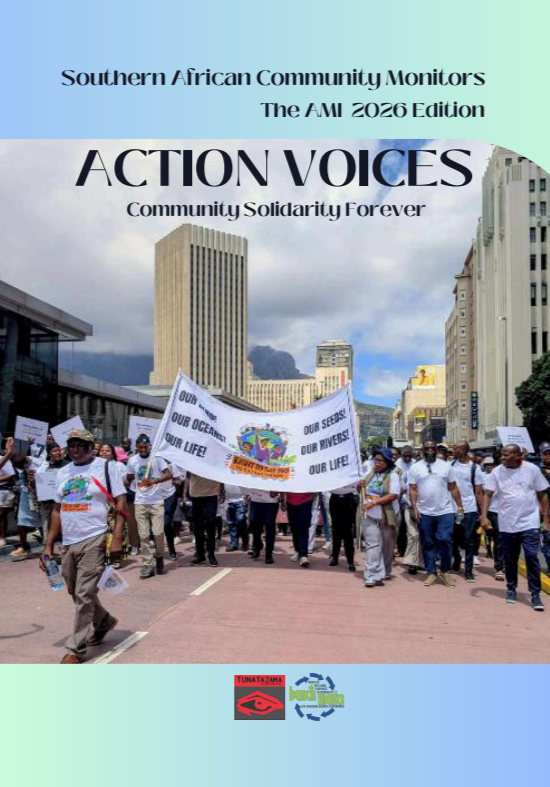
The Alternative Mining Indaba 2026 took place at a critical moment for mining-affected communities across Africa under the theme: “Alternative Stories of Mining: Communities for Justice in the Energy Transition. ” The Indaba centred community voices and lived experiences, challenging dominant narratives that position mining as development while communities continue to face displacement, water pollution, environmental degradation, and exclusion from decision-making.
This publication brings together reflections from delegates who attended AMI 2026, capturing their first hand experiences, observations, and insights from the event. Through these reflections, community monitors and activists from across Southern Africa share what they witnessed, heard, and engaged with highlighting lived realities of mining, including unsafe conditions, loss of livelihoods, and the violation of cultural and spiritual rights such as the relocation of ancestral graves.
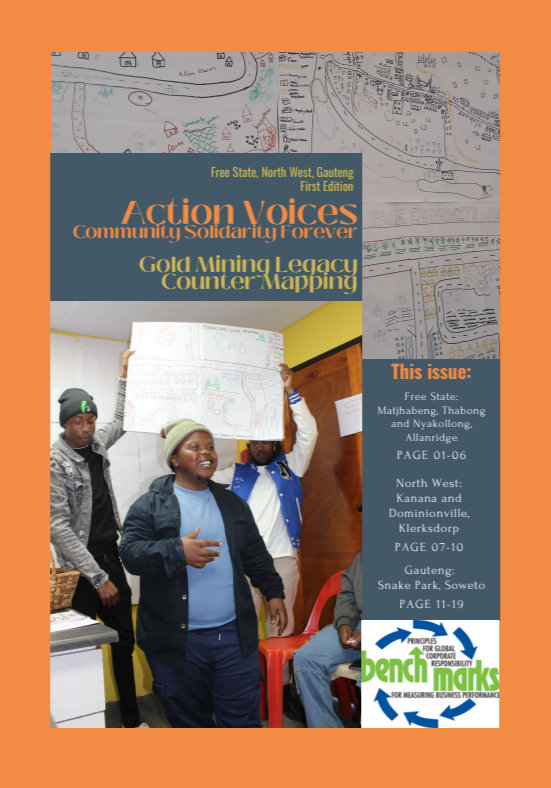
This publication brings together the voices, experiences, and countermapping stories of communities living alongside gold tailings and mining activities in the Free State, North West, and Gauteng provinces. Participants from Nyakallong, Virginia, and Welkom in the Free State; Jouberton, Kanana, and Dominionville in Klerksdorp; and Snake Park in Soweto have shared their lived realities through the Community Monitoring School. Their contributions reflect the strength of community knowledge and the importance of documenting local experiences that are often overlooked.
Through the leadership of Nyakallong Community Organization and GUBICO in the Free State, the Justice and Peace Commission of the Klerksdorp Diocese in North West, and Snake Bambabanani Co-operative together with the Snake Park Cerebral Palsy Forum in Gauteng, this work highlights how communities are organizing, learning, and advocating for environmental and social justice. Countermapping has allowed participants to tell their own stories, map risks and resources, and build collective understanding about the impact of mining and gold tailings on their health, environment, and livelihoods.
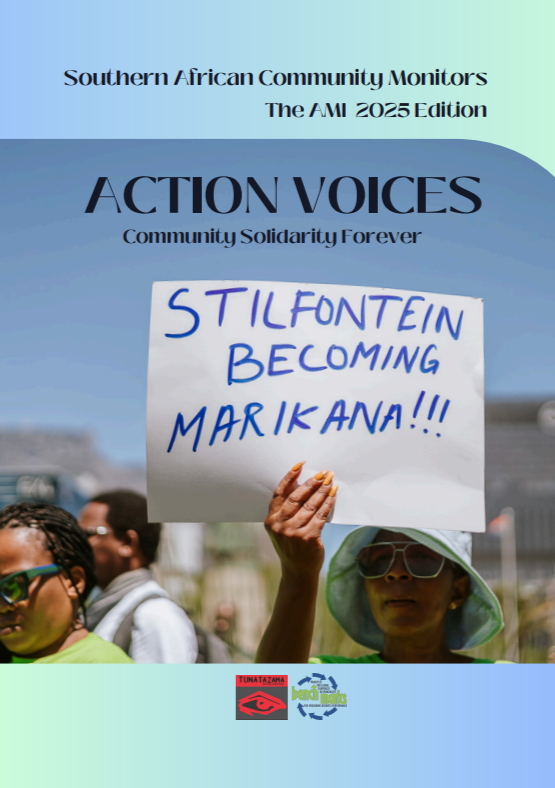
Summary: The 2025 Alternative Mining Indaba (AMI) meant a lot to many; accordingly, it was the culmination of voices seeking systemic change. This edition of Tunatazama features a wide range of community reflections on their general lived experiences and critical issues. This publication is a rare platform dedicated to community voices in the region.
The objective is to ensure that the grassroots perspective is not relegated to the back seat; it is a direct protest against systemic marginalisation from mainstream platforms. The Alternative Mining Indaba of 2025, has brought in a new energy with a progressive shift, which opens up the space to the democratic process. This year, the inaugural general assembly sat for the first time to begin a process of transformation and opening up the decision-making to communities. Despite the challenges which come with platforms like AMI, there is a need to recognise that the real convergence is the implicit agreement on the minimum program which seeks to mobilise and build a powerful voice of the mining-affected community to drive change in the extractive sector.
Thus, the Assembly has resolved to broadly consult with the wider community and civil society organisations across the continent to be part of this moment and also to ensure the sustainability of the AMI.
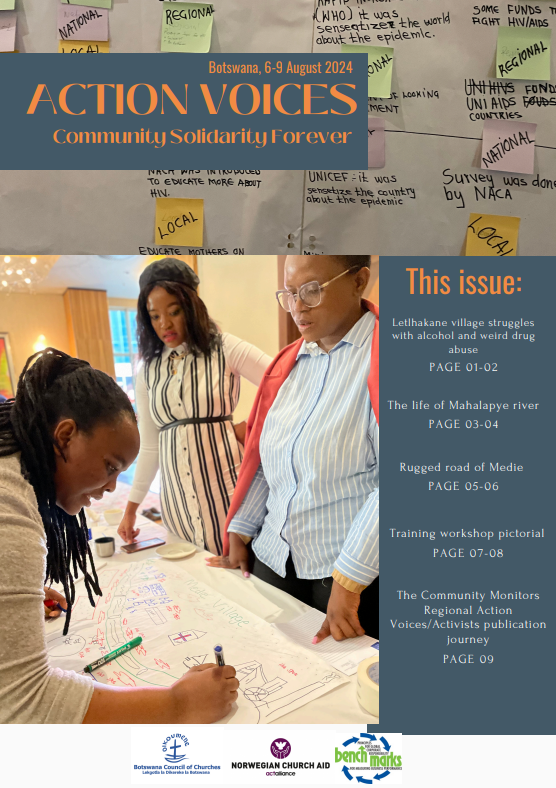
Summary: On the 06 -to 09 August the Botswana Council of Church with the support of Bench Marks Foundation and the Norwegian church hosted a community monitoring training in Gaborone. The community monitoring project is a flagship project of the Bench Marks Foundation, which focuses on capacitating the mining-affected community. This model of the training is based on accessible tools like social mapping, timelines and writing, which are known to enhance community capacity.
The program has a footprint in South Africa, Tanzania, Zimbabwe, Mozambique, and Zambia. Approximately Twelve dynamic community members from Letlhakane, Medie, and Mahalapye, underwent the training. The process has highlighted three issues faced by these communities. All villages have mining-related problems, which vary. Mahalapye village faces the depletion of river sands in the Mahalapye river, due to rampant sand mining, Whilst Medie a coal mine host community has been struggling with an impassable road, degraded by trucks which leads to difficulty and striving for the community.
Letlhakane is one community which has attracted diverse fortune seekers due to elaborate diamond mining which includes the likes of Orapa mine. Letlhakane community is experiencing confluences of social issues which include alcohol and drug abuse.
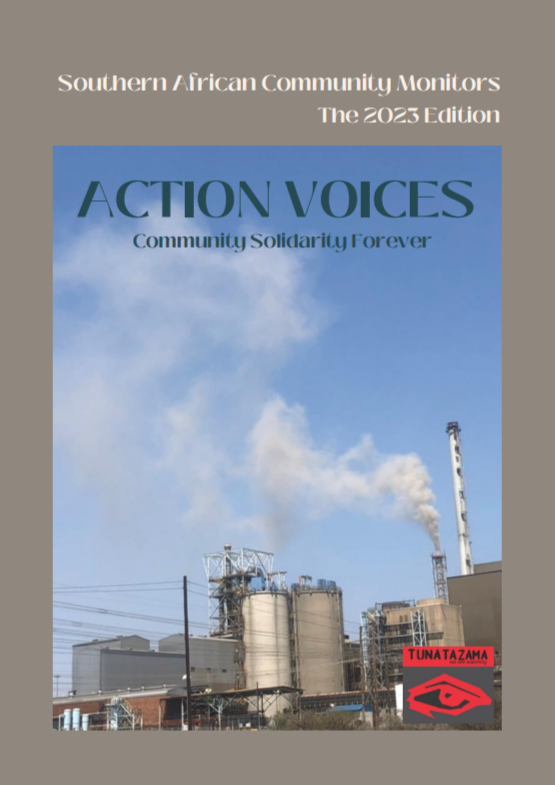
Summary: This edition comes at a critical time when there is a renewed appetite for raw materials in the world to
mitigate the climate change crisis. The energy transition debate is largely anchored on market principles
with little emphasis on the equitable distribution of energy resources and energy justice.
Whilst the focus on mining is gradually being positioned towards building an alternative energy industry of
renewables, its prospective target market is perceived to be Sub-Saharan Africa. It is without dispute that the region is lagging, with over 50 per cent of people having no access to electricity.
However, many of the minerals sought to achieve this transition, still sit on the African continent. It is only
hopeful to think that this should come as a guarantee to the communities who give up their land and risk
their livelihood, that they will be the first beneficiaries of the energy transition
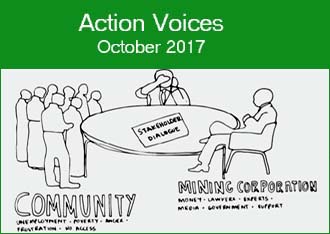
Summary: A recent report on Transformation by the Chamber of Mines, available on their website, states that the mining sector has played a critical developmental role over the past 140 years, transforming South Africa into the most industrialised country in Africa. It notes mining as a major contributor to the economy with significant contributions to employment numbers, export earnings, attracting foreign direct investment, creating GDP and contributing to significant transformation in the economy.
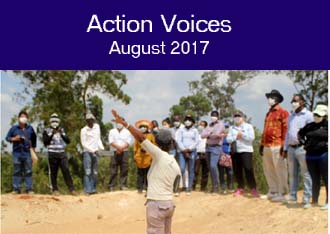
Summary: The new mining charter is another most moderate document. It represents the push by a political and rich elite to win further gains for themselves but excludes any really changes for workers in the industry and communities who suffer the consequence of mining operation. It ignores important questions of environmental destruction.
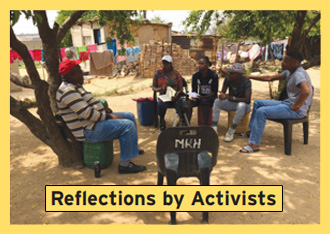
Summary: Over the years Bench Marks has worked with communities in the platinum and coal mining areas and we have ongoing contact with activists who are part of the community monitors network. We asked ourselves “What can we learn from the experiences of these activists about the capacities needed by communities?”
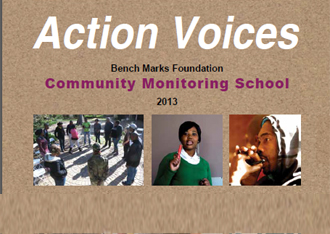
Summary: The Bench Marks Foundation developed the concept of the Community Monitoring School because a vacuum of knowledge exists within communities when dealing with big corporations. The message of the Community Monitoring School is “nothing for us without us” and the 2013 school’s motto was “We are Watching You!”…
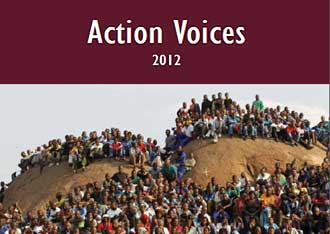
Summary: The foreward by the Rt. Reverend Dr. Jo Seoka sets the pace for this incisive issue which continus with monitor’s writing and community reports on happenings in various parts of the country includuding Ekurhuleni, Rustenburg, Vaal, Klerksdorp, Free State, Limpopo and Mpumalanga…
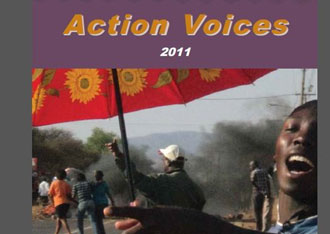
Summary: The issue opens with the customary foreward by the Rt. Reverend Dr. Jo Seoka and, thereafter, the remainder of this issue is devoted to monitor’s writing and community reports followed by an article on the use of social media and building networks. It closes with some insight into recent action research…
Summary: The Bench Marks Foundation has had a long relationship with the communities of Rustenburg. In 2007 we produced the first report (Policy Gap 1) where we reviewed the Corporate Social Responsibility of mining corporations operating in Rustenburg. In 2011 we produced our second study to review the changes since our first 2007 report….
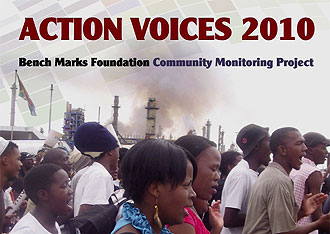
Summary: This issue features a foreward by the Rt. Reverend Dr. Jo Seoka, an Introduction by BMF Executive Director John Capel, sections covering monitor’s writing, and community reports as well as 2 interesting articles on building the African community monitor’s network and using new media as an organizing tool…

The booklets are part of a series emanating from Benchmarks Foundation community monitors training programme.The program was oriented to respond to the challenges posed to coronavirus pandemic and the hash impact on communities living near mine.This was a one of the issues emerged strongly during the pandemic was that communities are struggling to put food on the table and monitors also highlighted the challenges, with food price sky rocketing ideas emerged from food bank, bulk groceries e.t.c and one that also stood strongly was growing own food because we believe growing food is like printing own money.
For More On Covid Responses
- View and/or download the complete publication ( FINAL-FOOD-PRICING-BOOKLET #3 )
- View and/or download the complete publication ( FINAL SCHOOLS BOOKLET #2 )
- View and/or download the complete publication ( FINAL WOMEN BOOKLET #1 )
- View and/or download the complete publication (Voices from the Communities NOVEMBER )